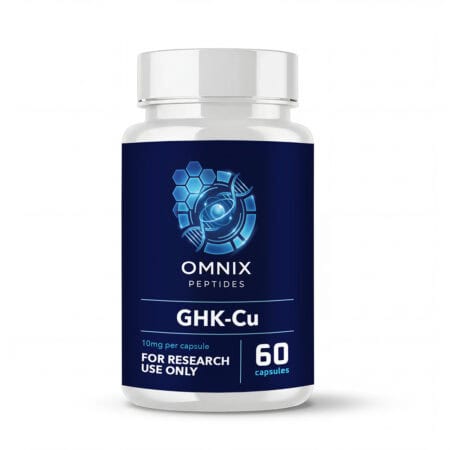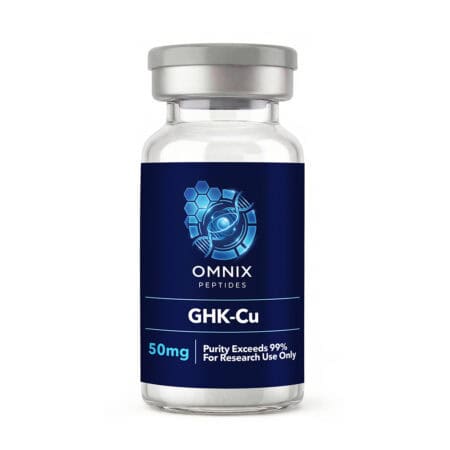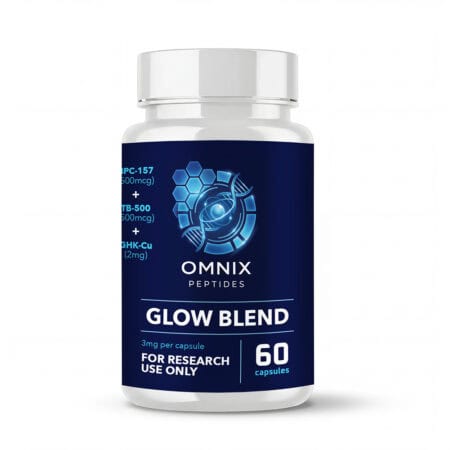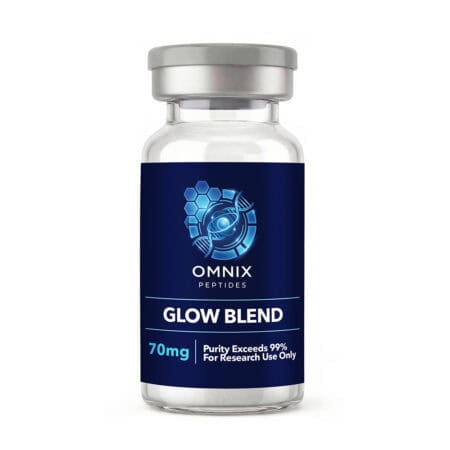
Skin and hair research peptides are compounds investigated in the peer-reviewed literature for their effects in dermal-collagen, wound-healing, hair-follicle, and pigmentation models. Research has investigated the following peptides in the context of skin- and hair-related preclinical and clinical models: GHK-Cu, the Glow Blend (a combination of GHK-Cu, BPC-157, and TB-500), and Melanotan II.
The skin-and-hair-research literature is unusually well-developed at the dermatology end — GHK-Cu has decades of peer-reviewed dermatology research and widespread use in topical cosmetic formulations. Melanotan II has a more limited and more cautionary literature, with reported melanogenic effects but documented adverse-event reports including melanocytic nevus darkening and rhabdomyolysis in case reports.
What Peer-Reviewed Research Investigates in This Category
Skin-and-hair-category research in the published literature investigates several mechanistic themes:
- Dermal extracellular matrix synthesis — collagen-I, elastin, and decorin gene-expression effects of the GHK tripeptide and its copper complex, primarily in cultured human fibroblasts and ex vivo skin explants.
- Wound healing and anti-inflammatory effects — GHK-Cu studies in diabetic-wound, decubitus-ulcer, and post-procedure-healing models.
- Hair follicle regeneration — investigations of GHK-Cu copper-tripeptide-1 (CTP-1) effects on hair-follicle size, anagen induction, and 5-α-reductase activity, with a Pickart-group lineage of publications.
- Melanogenesis and melanocortin signaling — Melanotan II (MT-II) and the closely related approved compound afamelanotide as melanocortin-1 receptor agonists driving eumelanin synthesis, investigated for photoprotection in erythropoietic protoporphyria and (less appropriately, in the broader market) cosmetic tanning.
GHK-Cu is permitted in topical cosmetic formulations in the United States and the European Union and has been the subject of substantial peer-reviewed dermatology research. Melanotan II is not approved by the FDA or EMA; the structurally related compound afamelanotide is EMA- and FDA-approved for a narrow erythropoietic protoporphyria indication, not for general cosmetic or tanning use.
Compounds Studied in Skin and Hair Research
GHK-Cu
GHK-Cu (glycyl-L-histidyl-L-lysine bound to a Cu²⁺ ion; CAS 89030-95-5) is an endogenous human copper-binding tripeptide with substantial dermatology research literature. Pickart and colleagues’ decades of work, summarized in Pickart et al. (2014, BioMed Res Int; 2018, Cosmetics) report copper-dependent regulation of collagen, elastin, and antioxidant gene expression in dermal and connective tissue, with separate investigations into hair-follicle effects.1 GHK-Cu is permitted in topical cosmetic formulations.
Glow Blend (GHK-Cu + BPC-157 + TB-500)
The Glow Blend is a research format combining GHK-Cu, BPC-157, and TB-500. There are no head-to-head peer-reviewed studies of the three-component blend itself. The mechanistic rationale combines GHK-Cu’s collagen/elastin gene-expression effects with the wound-repair and angiogenesis mechanisms attributed to BPC-157 and the TB-500 fragment of thymosin β4 — including the Sosne et al. RGN-259 clinical work on full-length Tβ4 in corneal-epithelial healing.2 Researchers selecting the blend format should consult each constituent’s individual literature.
Melanotan II
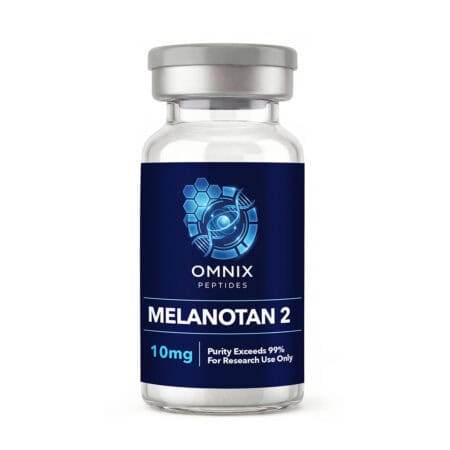
Melanotan II (MT-II; CAS 121062-08-6) is a cyclic synthetic heptapeptide analog of α-MSH and a non-selective agonist at melanocortin receptors (MC1R, MC3R, MC4R, MC5R). Dorr et al. (1996) and subsequent research investigated MT-II for melanogenic and erectogenic effects in animal models and limited human studies.3 Published case-report literature documents adverse events including nevus darkening, atypical melanocytic lesions, and isolated rhabdomyolysis. Not approved by the FDA or EMA. The structurally related approved compound afamelanotide is licensed for a narrow erythropoietic protoporphyria indication. Also classified under sexual-health research.
Frequently Asked Research Questions
What peptides are studied for skin and hair research?
The peer-reviewed skin-and-hair-research literature focuses on the copper-binding tripeptide GHK-Cu (collagen, elastin, and hair-follicle effects), the Glow Blend (a combination of GHK-Cu, BPC-157, and TB-500), and the melanocortin agonist Melanotan II (melanogenesis and skin pigmentation).
Is GHK-Cu peer-reviewed and used in approved skincare products?
Yes. GHK-Cu has substantial peer-reviewed dermatology research dating to the early 1970s and is permitted as an active ingredient in topical cosmetic formulations in the United States, European Union, and many other jurisdictions. It is not approved as a pharmaceutical drug for any specific disease indication, and the research-grade material supplied for laboratory work is distinct from finished cosmetic formulations.
Is Melanotan II safe? Is it approved?
Melanotan II is not approved by the FDA, EMA, or any major regulatory authority. The published case-report literature documents adverse events including darkening of existing nevi, development of atypical melanocytic lesions, and isolated cases of rhabdomyolysis. A structurally related compound, afamelanotide, is approved for a narrow erythropoietic protoporphyria indication and is not interchangeable with Melanotan II.
Does the Glow Blend have peer-reviewed studies of the combination?
No head-to-head peer-reviewed studies of the three-component GHK-Cu + BPC-157 + TB-500 blend have been published. The published literature evaluates each constituent individually. Researchers selecting the blend format should consult the GHK-Cu, BPC-157, and TB-500 literature separately, with the understanding that combination behavior cannot be inferred from individual-compound data.
What is the difference between GHK and GHK-Cu?
GHK is the free tripeptide (glycyl-L-histidyl-L-lysine; CAS 49557-75-7), molecular weight 340.38 g/mol. GHK-Cu is the same tripeptide complexed with a single Cu²⁺ ion (CAS 89030-95-5), molecular weight 403.93 g/mol. The biological activity in the published literature is generally attributed to the copper complex; the copper is mechanistically essential for many of the reported gene-expression effects.
References
- Pickart L, Vasquez-Soltero JM, Margolina A. GHK peptide as a natural modulator of multiple cellular pathways in skin regeneration. BioMed Res Int. 2015;2015:648108. PubMed.
- Sosne G, Dunn SP, Kim C. Thymosin β4 significantly improves signs and symptoms of severe dry eye in a Phase II randomized trial. Cornea. 2015;34(5):491–496. PubMed.
- Dorr RT, Lines R, Levine N, et al. Evaluation of melanotan-II, a superpotent cyclic melanotropic peptide in a pilot phase-I clinical study. Life Sci. 1996;58(20):1777–1784. PubMed.