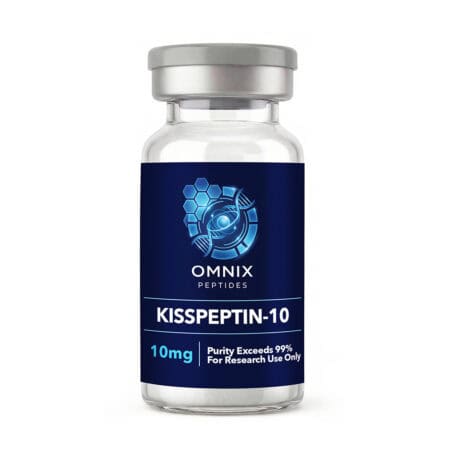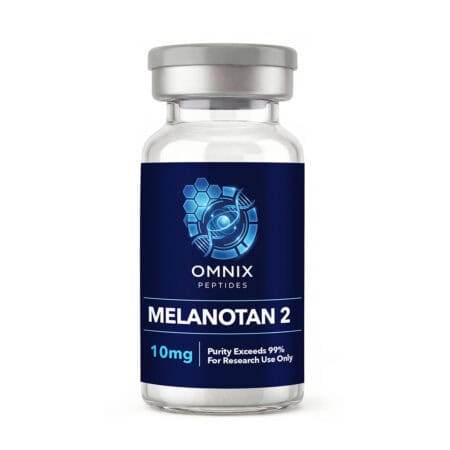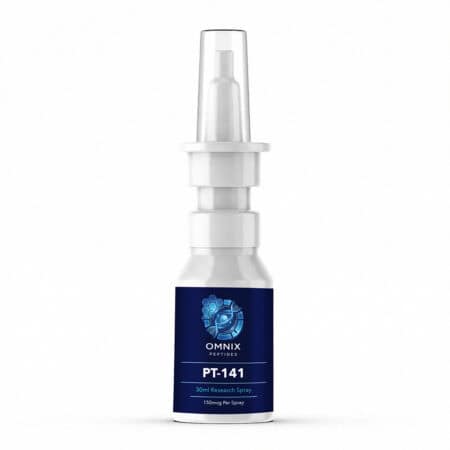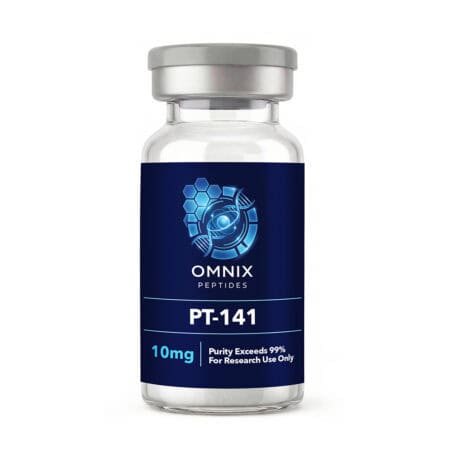
Sexual health research peptides are compounds investigated in the peer-reviewed literature for their effects on the central nervous system and hypothalamic-pituitary-gonadal (HPG) axis pathways underlying sexual desire, arousal, and reproductive physiology. Research has investigated the following peptides in the context of sexual-health preclinical and clinical models: PT-141 (bremelanotide), Kisspeptin-10, and Melanotan II.
This category has both well-developed clinical data (bremelanotide is FDA-approved for hypoactive sexual desire disorder in premenopausal women) and a deep mechanistic-neuroendocrinology literature (kisspeptin as the master upstream regulator of GnRH pulsatility). Melanotan II shares a melanocortin-receptor mechanism with PT-141 but has a more limited and more cautionary published profile.
What Peer-Reviewed Research Investigates in This Category
Sexual-health-category research in the published literature investigates two principal pathways:
- Melanocortin receptor agonism (central pathway) — PT-141 (bremelanotide) and Melanotan II as agonists at melanocortin receptors (with PT-141 showing preferential activity at MC3R and MC4R, the centrally expressed subtypes). Mechanism: central CNS activation of pro-sexual signaling, distinct from peripheral vasoactive mechanisms (PDE5 inhibitors).
- HPG axis regulation via kisspeptin signaling — Kisspeptin-10 as a fragment of the parent peptide kisspeptin-54, acting at the KISS1R (GPR54) receptor on hypothalamic GnRH neurons. Mechanism: stimulation of pulsatile GnRH release, with downstream effects on LH, FSH, and gonadal steroidogenesis. Kisspeptin is now recognized in endocrinology textbooks as the master upstream regulator of mammalian reproductive function.
The PT-141 clinical literature includes the RECONNECT pivotal trials (Kingsberg et al., Obstet Gynecol 2019) supporting FDA approval. The kisspeptin literature is dominated by the Imperial College / Hammersmith group (Dhillo, Comninos, Skorupskaite) and includes published human studies investigating sexual brain processing and reproductive endocrinology. Melanotan II has more limited human data and a documented adverse-event case-report literature.
Compounds Studied in Sexual Health Research
PT-141 (Bremelanotide)
PT-141 (bremelanotide; CAS 189691-06-3) is a synthetic cyclic heptapeptide agonist at melanocortin receptors with preferential activity at MC3R and MC4R. Bremelanotide is FDA-approved (2019) for the treatment of hypoactive sexual desire disorder (HSDD) in premenopausal women. The RECONNECT pivotal trials (Kingsberg et al., 2019, Obstet Gynecol) demonstrated statistically significant improvements in desire and distress scores over 24 weeks of as-needed subcutaneous self-administration.1 Earlier published studies investigated PT-141 in male erectile dysfunction.
Kisspeptin-10
Kisspeptin-10 (Kp-10; CAS 374675-21-5) is the C-terminal decapeptide fragment of the parent peptide kisspeptin-54 (metastin), a product of the KISS1 gene. It acts at the kisspeptin receptor KISS1R (formerly GPR54) on hypothalamic GnRH neurons. The Dhillo / Comninos / Imperial College research program has published multiple human studies investigating intravenous kisspeptin administration and its effects on LH pulsatility, sexual brain processing (functional MRI), and reproductive endocrinology in healthy volunteers and clinical populations with hypothalamic hypogonadism.2 Not FDA-approved.
Melanotan II
Melanotan II (MT-II; CAS 121062-08-6) is a cyclic heptapeptide non-selective melanocortin receptor agonist. Wessells et al. (2000) reported erectogenic effects in men with organic erectile dysfunction.3 MT-II’s pharmacology overlaps with PT-141 — PT-141 is, in fact, a metabolite-inspired analog derived from the same melanocortin family. MT-II has documented adverse-event case reports including nevus darkening and isolated rhabdomyolysis. Not approved by the FDA or EMA. Also classified under skin-hair research for its melanogenic effects.
Frequently Asked Research Questions
What peptides are studied for sexual health research?
The peer-reviewed sexual-health research literature focuses on three peptides operating through two distinct mechanisms. PT-141 (bremelanotide) and Melanotan II are melanocortin receptor agonists acting on central pro-sexual pathways. Kisspeptin-10 acts at the kisspeptin receptor (KISS1R) on hypothalamic GnRH neurons to regulate the HPG axis. Bremelanotide is FDA-approved (2019); the others are not.
Is PT-141 FDA-approved?
Yes — the FDA approved bremelanotide (PT-141) in June 2019 for the treatment of hypoactive sexual desire disorder (HSDD) in premenopausal women. The approved use is subcutaneous self-administration on an as-needed basis. The FDA-approved bremelanotide pharmaceutical formulation, prescribed and dispensed through licensed clinical channels, is distinct from research-grade PT-141 supplied for in vitro laboratory work.
What is the difference between PT-141 and Melanotan II?
Both are cyclic heptapeptide melanocortin receptor agonists with overlapping pharmacology. PT-141 (bremelanotide) shows preferential activity at MC3R and MC4R — the central melanocortin receptor subtypes — and has a clinical development program supporting FDA approval for HSDD. Melanotan II is a less-selective agonist with substantial activity at MC1R, producing the melanogenic (skin-darkening) effects MT-II is known for. MT-II is not FDA-approved and has a more cautionary adverse-event case-report literature.
What does kisspeptin do?
Kisspeptin is the upstream regulator of mammalian reproductive function. Acting on kisspeptin receptors (KISS1R / GPR54) on hypothalamic GnRH neurons, it triggers pulsatile GnRH release, which in turn drives LH and FSH secretion from the pituitary and downstream gonadal steroidogenesis. The Imperial College / Hammersmith group has published human studies investigating intravenous kisspeptin’s effects on LH pulse frequency, fMRI brain responses to sexual stimuli, and reproductive endocrinology in clinical populations.
Is kisspeptin used in fertility clinical practice?
Kisspeptin is not approved by the FDA or EMA for fertility or any other clinical indication. The Imperial College group has investigated kisspeptin as a potential alternative to hCG for ovulation triggering in IVF cycles in research studies. Translation to approved clinical practice has not occurred as of 2026.
Why is Melanotan II classified under both sexual-health and skin-hair research?
Melanotan II’s non-selective melanocortin receptor agonism produces two distinct effects investigated in the literature: melanogenesis through MC1R activation in skin melanocytes (the skin-hair literature) and erectogenic and pro-sexual effects through MC3R and MC4R activation in the CNS (the sexual-health literature). It appears in both category hubs because the published research base addresses both.
References
- Kingsberg SA, Clayton AH, Portman D, et al. Bremelanotide for the treatment of hypoactive sexual desire disorder: two randomized phase 3 trials. Obstet Gynecol. 2019;134(5):899–908. PubMed.
- Comninos AN, Wall MB, Demetriou L, et al. Kisspeptin modulates sexual and emotional brain processing in humans. J Clin Invest. 2017;127(2):709–719. PubMed.
- Wessells H, Gralnek D, Dorr R, Hruby VJ, Hadley ME, Levine N. Effect of an alpha-melanocyte stimulating hormone analogue on penile erection and sexual desire in men with organic erectile dysfunction. Urology. 2000;56(4):641–646. PubMed.