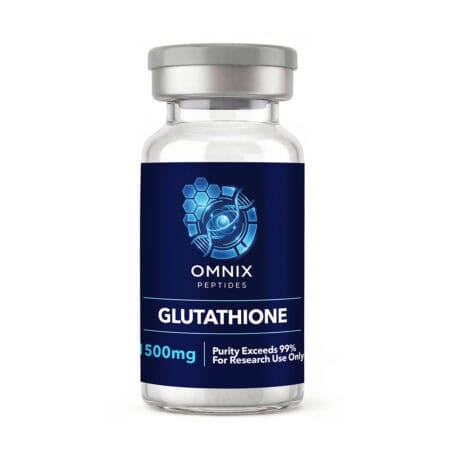
Glutathione (L-glutathione, GSH; CAS 70-18-8) is an endogenous tripeptide composed of glutamate, cysteine, and glycine linked by an atypical γ-glutamyl peptide bond between the γ-carboxyl group of glutamate and the amino group of cysteine. The molecule is synthesized intracellularly by the sequential ATP-dependent action of glutamate-cysteine ligase (GCL) and glutathione synthetase, with cysteine availability as the rate-limiting step. Glutathione is the most abundant intracellular non-protein thiol in mammalian cells and the central substrate of the cellular antioxidant defense system; it has been investigated as an exogenously administered compound across healthy volunteer pharmacokinetic studies, randomized clinical trials in Parkinson’s disease and nonalcoholic fatty liver disease, and a large preclinical and mechanistic literature, with published studies appearing in journals including the European Journal of Clinical Pharmacology, Movement Disorders, Progress in Neuro-Psychopharmacology & Biological Psychiatry, the Journal of Parkinson’s Disease, and BMC Gastroenterology.
The headline finding in the human glutathione pharmacology literature is from a 1992 pharmacokinetic study published in the European Journal of Clinical Pharmacology, in which Witschi and colleagues administered a single 3 g oral amount of glutathione to seven healthy volunteers and reported that plasma concentrations of glutathione, cysteine, and glutamate did not increase significantly over the 270-minute post-administration sampling window [1]. The investigators attributed the finding to extensive hydrolysis of orally administered glutathione by intestinal and hepatic γ-glutamyltransferase, and concluded that it is not possible to increase circulating glutathione to a clinically beneficial extent by the oral administration of a single administration of 3 g of glutathione
. This pharmacokinetic limitation has shaped the entire downstream research literature on glutathione administration, which has subsequently emphasized intravenous, intranasal, and topical routes for systemic delivery, and the alternative strategy of supplying glutathione precursors (cysteine, glycine) rather than the intact tripeptide.
Glutathione is not approved by the FDA, EMA, or any other regulatory authority as a therapeutic agent for any indication. Glutathione has been used clinically as an adjunct in the management of certain chemotherapy-induced toxicities and in poisoning research; in those contexts, intravenous glutathione is administered as a hospital-pharmacy compound rather than as a registered drug product. The peer-reviewed clinical trial literature on exogenous glutathione is dominated by small Phase 1 and Phase 2 studies in Parkinson’s disease and nonalcoholic fatty liver disease (NAFLD), with mixed efficacy findings and a generally favorable tolerability profile across the routes studied.
Important Note on the Evidence Base
Important note on the evidence base: The mechanistic biochemistry of glutathione is one of the most thoroughly characterized systems in cellular biology, with a published literature spanning more than fifty years and including foundational work on the glutathione cycle, glutathione S-transferase (GST) enzymes, glutathione peroxidase (GPx) enzymes, and the GSH/GSSG redox couple. The clinical research base on exogenous glutathione administration is much more limited. The published clinical trials are predominantly small (n < 50 in most studies), Phase 1 or Phase 2 in design, and have produced mixed and frequently statistically null efficacy results. There are no completed Phase 3 trials of exogenous glutathione for any indication. Researchers consulting this page should distinguish between the mechanistic biochemistry of endogenous glutathione (well established) and the clinical pharmacology of exogenous glutathione administration (early-stage and inconclusive), and should consult the cited primary literature in the References section.
Mechanism of Action
Glutathione functions in the cell through several distinct but interconnected mechanisms. Unlike most compounds in the Omnix research catalog, glutathione is not a receptor agonist or ligand at a specific signaling target; its biological activity arises from its chemical reactivity as a thiol-containing tripeptide and from its role as a co-substrate for a family of enzymes that use it to perform specific transformations.
Direct antioxidant activity and the GSH/GSSG redox couple. The cysteine residue in glutathione carries a free thiol (-SH) group that is the chemically reactive site of the molecule. Glutathione directly reduces reactive oxygen species (ROS) including hydrogen peroxide, hydroxyl radicals, and lipid peroxides; in the process two glutathione molecules are oxidized to form glutathione disulfide (GSSG), linked by a disulfide bridge between the two cysteine thiols. The intracellular ratio of reduced to oxidized glutathione (GSH/GSSG) is a primary cellular redox indicator, with the ratio typically maintained at approximately 100:1 in the cytoplasm under non-stressed conditions. Restoration of GSH from GSSG is catalyzed by glutathione reductase using NADPH as the reducing cofactor.
Enzymatic conjugation reactions — glutathione peroxidase and glutathione S-transferase. Glutathione is the obligate co-substrate for two enzyme families that perform much of the cellular detoxification chemistry. The glutathione peroxidases (GPx, selenium-containing enzymes) use glutathione to reduce hydrogen peroxide and organic peroxides to water and corresponding alcohols. The glutathione S-transferases (GST) catalyze the conjugation of glutathione to electrophilic substrates (including many xenobiotics and reactive metabolites), producing glutathione conjugates that are then exported via specific multidrug resistance-associated protein (MRP) transporters and eventually excreted as mercapturic acids. These Phase II detoxification reactions are the basis of glutathione’s role in xenobiotic clearance and in the cellular response to oxidative and electrophilic stress.
Redox-sensitive signaling and protein S-glutathionylation. Glutathione also participates in post-translational protein modification through S-glutathionylation — the reversible formation of a mixed disulfide bond between a glutathione molecule and a cysteine residue on a target protein. Protein S-glutathionylation has been characterized as a redox-sensitive regulatory mechanism affecting the activity of multiple signaling enzymes, transcription factors, and cytoskeletal proteins. The literature on protein S-glutathionylation is one of the more active areas of contemporary redox biology research and connects glutathione status to cell signaling pathways that extend well beyond classical antioxidant defense.
Pharmacokinetic limitation of exogenous oral glutathione. The Witschi 1992 study established that orally administered glutathione is extensively hydrolyzed by intestinal and hepatic γ-glutamyltransferase before reaching the systemic circulation, with negligible measurable increase in plasma glutathione following a single 3 g oral amount [1]. A subsequent randomized double-blind placebo-controlled trial by Allen and Bradley (2011) administered oral glutathione capsules at 500 mg twice daily for 4 weeks to 40 healthy adults and reported no significant changes in red-blood-cell glutathione status, urinary 8-hydroxy-2′-deoxyguanosine (a biomarker of oxidative DNA damage), or urinary F2-isoprostanes (a biomarker of lipid peroxidation), compared with placebo [2]. These findings establish the pharmacokinetic case for parenteral and mucosal routes of administration in research models requiring measurable elevation of systemic glutathione.
Available Forms
Omnix Peptides currently supplies glutathione in a single research format. Each lot is independently characterized by HPLC and LC–MS, with a batch-specific Certificate of Analysis available on the product page.
- Glutathione Vial — lyophilized powder for reconstitution. Available in 1500 mg per vial. The vial is the canonical research format used in the published clinical literature on parenteral glutathione administration; intravenous infusion is the route used in the Hauser and Sechi Parkinson’s disease trials cited below.
Glutathione is classified under the Longevity research category. For research framed around overlapping antioxidant and mitochondrial-redox biology, see also the related compound hubs for NAD+ (a distinct redox cofactor central to oxidative phosphorylation and sirtuin signaling) and MOTS-c (a mitochondrial-derived peptide investigated in metabolic and longevity research models).
Amount in the Published Research Literature
The following administration ranges describe the protocols used in the peer-reviewed glutathione clinical trial literature. They are reported here for research-reference purposes only and do not constitute administration recommendations of any kind.
Sechi 1996 open-label IV glutathione in early Parkinson’s disease. Sechi and colleagues at the University of Sassari (Italy) administered intravenous glutathione at 600 mg twice daily over 30 days to nine patients with early, previously untreated Parkinson’s disease, in an open-label design [3]. The published protocol described a roughly 42% improvement in clinical disability scores during the treatment period that the authors reported persisted for approximately 2–4 months after discontinuation. The study established the first published clinical signal for IV glutathione in Parkinson’s research and motivated subsequent randomized work.
Hauser 2009 randomized double-blind IV glutathione in Parkinson’s disease. Hauser and colleagues at the University of South Florida randomized 21 patients with Parkinson’s disease whose motor symptoms were not adequately controlled with their current medication regimen to receive intravenous glutathione 1,400 mg or placebo, administered three times weekly for 4 weeks [4]. The published protocol reported no statistically significant differences in Unified Parkinson’s Disease Rating Scale (UPDRS) scores between groups; the trial authors interpreted the data as suggesting the possibility of a mild symptomatic effect that would require a larger study to evaluate. Glutathione was well tolerated with no adverse-event-related withdrawals.
Mischley 2017 Phase IIb intranasal glutathione in Parkinson’s disease. Mischley and colleagues conducted a 12-week double-blind placebo-controlled trial of 45 patients with Hoehn & Yahr Stage 1–3 Parkinson’s disease, randomized to receive intranasal placebo, 100 mg glutathione, or 200 mg glutathione three times daily, with a 1-month washout period [5]. The published protocol reported improvements in total UPDRS scores across all groups including placebo, with the high-amount group showing the largest within-group change from baseline but no statistically significant between-group separation from placebo. The trial design was framed by the authors as a feasibility study for a subsequent Phase 3 disease-modification protocol.
Honda 2017 oral glutathione pilot in NAFLD. Honda and colleagues conducted an open-label single-arm multicenter pilot trial of oral glutathione at 300 mg/day for 4 months in 34 patients with NAFLD diagnosed by ultrasonography, following a 3-month lifestyle-intervention phase [6]. The published protocol reported statistically significant reductions in alanine aminotransferase (ALT), triglycerides, non-esterified fatty acids, and ferritin levels after the 4-month glutathione phase. The trial design did not include a placebo control and the authors framed the findings as pilot data motivating larger controlled trials.
Allen 2011 oral glutathione RCT in healthy adults. Allen and Bradley conducted a randomized double-blind placebo-controlled trial of oral glutathione 500 mg twice daily for 4 weeks in 40 healthy adults, with red-blood-cell glutathione status, urinary 8-OHdG, and urinary F2-isoprostanes as outcome measures [2]. The trial reported no statistically significant changes in any of the prespecified biomarkers of glutathione status or oxidative stress relative to placebo, consistent with the Witschi 1992 pharmacokinetic finding that intact oral glutathione is poorly bioavailable.
Route-of-administration considerations across the literature. The clinical research literature on exogenous glutathione has used intravenous infusion (typical amounts 600–1,400 mg per session), intranasal administration (typical daily amounts 200–600 mg divided into three amounts), nebulized inhalation (in cystic fibrosis research), topical application (in dermatology and pigmentation research), and oral administration in both unmodified and liposomal/sublingual formulations. The intact oral route is poorly bioavailable; alternative strategies investigated in the published literature include precursor supplementation (cysteine, glycine, or N-acetylcysteine) and modified-delivery oral formulations.
Researchers planning protocols are referred to the original primary literature cited in the References section for full methodological detail, including vehicle composition, route-specific delivery configuration, outcome assessment timepoints, and biomarker analytical methods.
Frequently Asked Questions
Is glutathione FDA-approved?
No. Glutathione is not approved by the FDA, EMA, or any other regulatory authority as a therapeutic agent for any indication. Glutathione has been used clinically as an adjunct in the management of certain chemotherapy-induced toxicities and in poisoning research, in which case it is prepared and administered as a hospital-pharmacy compound rather than as a registered drug product. There are no completed Phase 3 trials of exogenous glutathione for any indication.
What is the published evidence base for exogenous glutathione?
The mechanistic biochemistry of endogenous glutathione is one of the most extensively characterized systems in cellular biology. The clinical research base on exogenous glutathione administration is much more limited, with most published trials being small (n < 50), Phase 1 or Phase 2 in design, and reporting mixed efficacy. Notable published work includes the Witschi 1992 oral pharmacokinetic study, the Sechi 1996 and Hauser 2009 IV glutathione Parkinson’s disease trials, the Mischley 2017 Phase IIb intranasal glutathione trial, and the Honda 2017 oral glutathione NAFLD pilot.
Why is orally administered glutathione poorly bioavailable?
Orally administered glutathione is extensively hydrolyzed by intestinal and hepatic γ-glutamyltransferase before reaching the systemic circulation. The Witschi 1992 study reported that a single 3 g oral amount did not significantly increase plasma glutathione, cysteine, or glutamate concentrations in healthy volunteers. The Allen 2011 randomized placebo-controlled trial of 500 mg twice daily for 4 weeks in healthy adults reported no significant changes in red-blood-cell glutathione status or in biomarkers of oxidative stress. These findings have shaped subsequent research toward parenteral and mucosal routes of administration, or alternative strategies that supply glutathione precursors rather than the intact tripeptide.
What mechanism of action has been characterized for glutathione in the research literature?
Glutathione functions through several interconnected mechanisms rather than at a single receptor target. The cysteine thiol of glutathione directly reduces reactive oxygen species, with two glutathione molecules oxidizing to form glutathione disulfide (GSSG). Glutathione is the obligate co-substrate for glutathione peroxidase enzymes (which reduce peroxides) and for glutathione S-transferase enzymes (which conjugate glutathione to electrophilic substrates for Phase II detoxification). Glutathione also participates in protein S-glutathionylation, a redox-sensitive post-translational modification of cysteine residues on target proteins.
What does the research literature say about glutathione in Parkinson’s disease?
Multiple post-mortem and imaging studies have reported reduced glutathione levels in the substantia nigra of patients with Parkinson’s disease, which has motivated investigation of glutathione augmentation as a research hypothesis. Three notable clinical trials have been published. Sechi 1996 administered IV glutathione 600 mg twice daily for 30 days to nine patients in an open-label design and reported approximately 42% improvement in disability scores. Hauser 2009 conducted a randomized double-blind placebo-controlled pilot of IV glutathione 1,400 mg three times weekly for 4 weeks in 21 patients and reported no statistically significant difference from placebo on UPDRS scores. Mischley 2017 conducted a 12-week Phase IIb trial of intranasal glutathione in 45 patients and reported within-group improvements but no statistically significant separation from placebo.
What does the research literature say about glutathione in liver disease?
The Honda 2017 open-label single-arm multicenter pilot trial administered oral glutathione 300 mg/day for 4 months to 34 patients with nonalcoholic fatty liver disease (NAFLD) following a 3-month lifestyle-intervention phase. The trial reported statistically significant reductions in alanine aminotransferase, triglycerides, non-esterified fatty acids, and ferritin levels after the glutathione phase. The trial did not include a placebo control and was framed as pilot data motivating larger controlled trials. Intravenous glutathione has also been used as an adjunct in the management of certain hepatotoxin exposures and chemotherapy-induced toxicities in research and hospital-pharmacy settings.
How does glutathione differ from NAD+?
Glutathione and NAD+ are both small intracellular molecules central to cellular redox biology, but they are structurally and functionally distinct. Glutathione is a tripeptide (glutamate-cysteine-glycine) whose cysteine thiol directly reduces reactive oxygen species and which serves as a co-substrate for glutathione peroxidase and glutathione S-transferase enzymes. NAD+ is a dinucleotide cofactor central to oxidative phosphorylation, the mitochondrial electron transport chain, and sirtuin and PARP enzyme activity. The two compounds participate in overlapping but mechanistically distinct redox biology and are studied in distinct research programs.
References
- Witschi A, Reddy S, Stofer B, Lauterburg BH. The systemic availability of oral glutathione. Eur J Clin Pharmacol. 1992;43(6):667-669. doi:10.1007/BF02284971 · PubMed: 1362956
- Allen J, Bradley RD. Effects of oral glutathione supplementation on systemic oxidative stress biomarkers in human volunteers. J Altern Complement Med. 2011;17(9):827-833. doi:10.1089/acm.2010.0716 · PubMed: 21875351
- Sechi G, Deledda MG, Bua G, et al. Reduced intravenous glutathione in the treatment of early Parkinson’s disease. Prog Neuropsychopharmacol Biol Psychiatry. 1996;20(7):1159-1170. doi:10.1016/s0278-5846(96)00103-0 · PubMed: 8938817
- Hauser RA, Lyons KE, McClain T, Carter S, Perlmutter D. Randomized, double-blind, pilot evaluation of intravenous glutathione in Parkinson’s disease. Mov Disord. 2009;24(7):979-983. doi:10.1002/mds.22401 · PubMed: 19230029
- Mischley LK, Lau RC, Shankland EG, Wilbur TK, Padowski JM. Phase IIb study of intranasal glutathione in Parkinson’s disease. J Parkinsons Dis. 2017;7(2):289-299. doi:10.3233/JPD-161024 · PubMed: 28436395
- Honda Y, Kessoku T, Sumida Y, et al. Efficacy of glutathione for the treatment of nonalcoholic fatty liver disease: an open-label, single-arm, multicenter, pilot study. BMC Gastroenterol. 2017;17(1):96. doi:10.1186/s12876-017-0652-3 · PubMed: 28789631
For Research Use Only. The products described on this page are sold strictly for in vitro laboratory research and are not intended for human or animal consumption, diagnostic use, or therapeutic use. The published research summarized above is provided as scientific reference material. Nothing on this page constitutes medical advice, a therapeutic claim, or a recommendation for any use outside of a properly resourced and ethically reviewed research setting.