
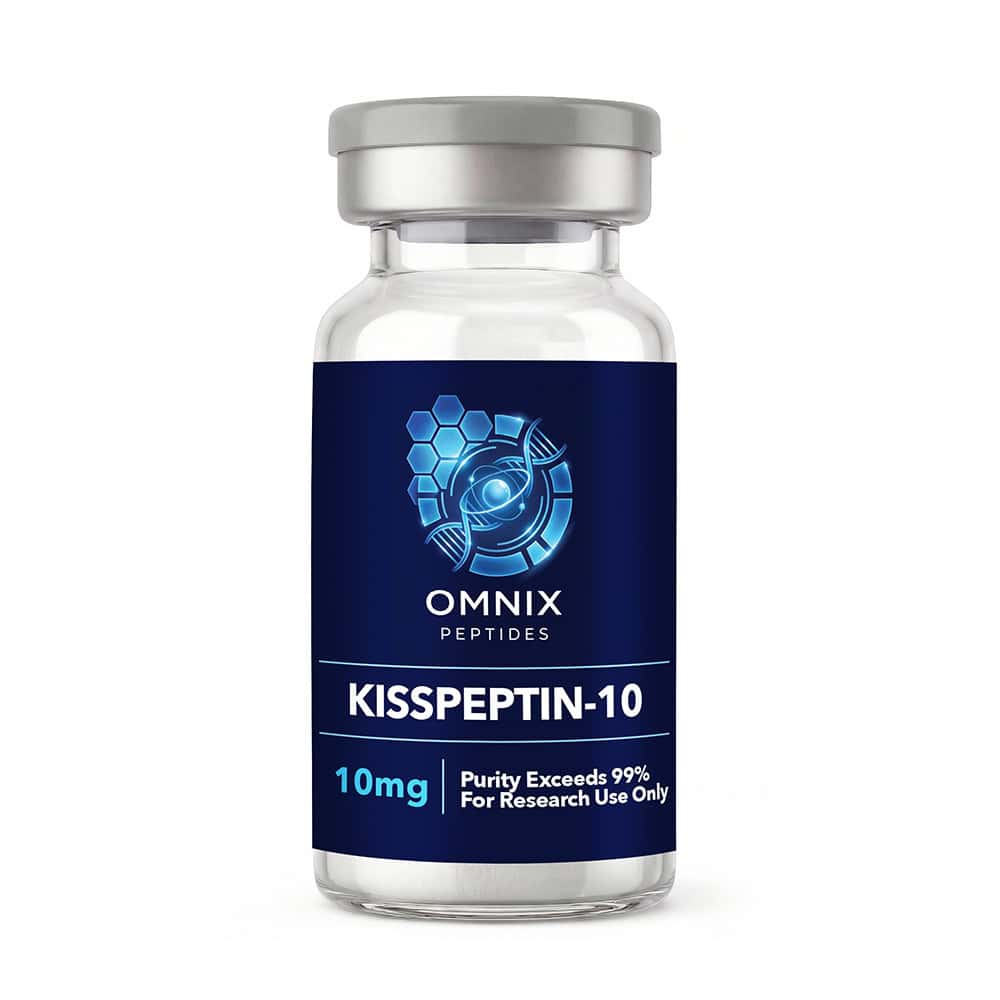
Kisspeptin-10 Vial
Kisspeptin-10 (also known as KP-10 or metastin 45-54; CAS 374675-21-5) is a synthetic 10-amino-acid C-terminal fragment of the human kisspeptin protein family encoded by the KISS1 gene.
Research goals: Sexual Health
Description
Kisspeptin-10 (also known as KP-10 or metastin 45-54; CAS 374675-21-5) is a synthetic 10-amino-acid C-terminal fragment of the human kisspeptin protein family encoded by the KISS1 gene. The decapeptide retains the bioactive RFamide C-terminal motif shared across all kisspeptin fragments and is a high-affinity agonist of the kisspeptin receptor (KISS1R, also known as GPR54), the upstream regulator of gonadotropin-releasing hormone (GnRH) neurons in the hypothalamus. Inactivating mutations in KISS1 or KISS1R cause hypogonadotropic hypogonadism in humans; activating mutations cause precocious puberty — establishing the kisspeptin–GnRH axis as a master regulator of reproductive endocrinology. Multiple peer-reviewed human clinical trials of kisspeptin-10 have been published in the Journal of Clinical Endocrinology & Metabolism and other top endocrinology journals.
In a 2011 escalating-amount study published in the Journal of Clinical Endocrinology & Metabolism, intravenous bolus administration of kisspeptin-10 in healthy men produced concentration-dependent significant increases in serum luteinizing hormone (LH) compared with saline, with peak stimulation observed 30–40 minutes after injection and serum testosterone significantly elevated at clinically relevant amounts [1].
Published Research on Kisspeptin-10
The following peer-reviewed studies are summarized below. Full citations and direct links to each publication appear in the References section. All studies described in this section were conducted in adult human participants.
LH Pulse Frequency in Men — Chan et al., Journal of Clinical Endocrinology & Metabolism (2011)
Chan and colleagues at the Massachusetts General Hospital Reproductive Endocrine Unit conducted the first human study evaluating kisspeptin-10 specifically (rather than the longer kisspeptin-54 fragment), with the objective of testing whether kisspeptin-10 increases LH pulse frequency through stimulation of GnRH neurons in healthy adult men. The study used both single-bolus concentration-response (0.01–3.0 µg/kg) and continuous-infusion protocols, with frequent-sampling LH pulse detection.
The investigators reported that continuous infusion of kisspeptin-10 increases mean LH, LH pulse frequency, LH pulse size, and testosterone secretion
in healthy adult men [1]. The findings established kisspeptin-10 as a potent stimulator of pulsatile GnRH/LH secretion in humans and supported the use of kisspeptin-10 specifically (rather than longer fragments) for pharmaceutical development given its shorter half-life and more rapid onset of action.
Read the full study: Kisspeptin-10 Is a Potent Stimulator of LH and Increases Pulse Frequency in Men (JCEM 2011).
Sexual Dimorphism Study — Jayasena et al., Journal of Clinical Endocrinology & Metabolism (2011)
Jayasena and colleagues at Imperial College London conducted a comparative escalating-amount study of intravenous bolus kisspeptin-10 in healthy adult men (n = 11) and healthy adult women (n = 35), measuring serum LH, FSH, sex steroid (estradiol or testosterone), and plasma kisspeptin immunoreactivity at multiple post-injection timepoints.
The investigators reported that serum LH was significantly elevated after kisspeptin-10 administration compared with saline at all tested amounts in men, with peak LH stimulation observed 30–40 minutes after injection; FSH and testosterone were also significantly elevated [2]. The reproductive-hormone response in women varied substantially with menstrual-cycle phase, establishing the sexually dimorphic and cycle-dependent character of the human kisspeptin response and informing amount-selection for downstream fertility-medicine clinical trials.
Read the full study: The Effects of Kisspeptin-10 on Reproductive Hormone Release Show Sexual Dimorphism in Humans (JCEM 2011).
Direct Comparison Study — Narayanaswamy et al., Human Reproduction (2016)
Narayanaswamy and colleagues conducted a within-subject crossover trial directly comparing intravenous kisspeptin-10, kisspeptin-54, and gonadotropin-releasing hormone (GnRH) on gonadotropin secretion in healthy adult men. Each subject received all three peptides at matched bolus amounts on separate visits, with serial measurement of serum LH and FSH for several hours post-administration.
The investigators reported that all three peptides produced significant LH and FSH responses at the amounts studied, with kisspeptin-10 producing a more rapid onset of LH response than kisspeptin-54 due to its shorter circulatory half-life [3]. The study clarified the relative pharmacodynamic profiles of kisspeptin fragments and supports the use of kisspeptin-10 specifically when rapid, controllable GnRH stimulation is required (e.g., in trigger-shot applications in assisted reproductive technology).
Read the full study: Direct Comparison of the Effects of Intravenous Kisspeptin-10, Kisspeptin-54 and GnRH on Gonadotrophin Secretion in Healthy Men (Hum Reprod Open 2016).
Pubertal Development Study — Aamir et al., BioMed Research International (2018)
Aamir and colleagues registered a clinical trial (NCT03286517) examining how the LH response to a single intravenous bolus of kisspeptin-10 changes across Tanner stages I–V in adolescent boys, with the objective of characterizing the developmental maturation of KISS1R signaling on GnRH neurons during human pubertal transition.
The investigators reported that the LH response to kisspeptin-10 administration increased significantly across Tanner stages, with post-kisspeptin plasma testosterone levels significantly elevated by Tanner stage V (P < 0.05) [4]. The data suggest that the sensitivity of KISS1R on GnRH neurons matures during the later stages of puberty, reaching adult-equivalent responsiveness at Tanner stage V — consistent with the role of the kisspeptin–GnRH axis as the gatekeeper of pubertal initiation.
Read the full study: Changes in the Responsiveness of the Hypothalamic-Pituitary-Gonadal Axis to Kisspeptin-10 Administration during Pubertal Transition in Boys (Biomed Res Int 2018).
About the Compound
The kisspeptins are a family of hypothalamic neuropeptides cleaved from a 145-amino-acid precursor protein encoded by the KISS1 gene. Post-translational processing yields multiple bioactive fragments — kisspeptin-54 (the original “metastin” form), kisspeptin-14, kisspeptin-13, and kisspeptin-10 — all sharing the same C-terminal arginine-amidated phenylalanine (RFamide) decapeptide that is responsible for receptor binding and bioactivity. Kisspeptin-10 (sequence YNWNSFGLRF-NH2) is the minimum bioactive fragment.
Kisspeptin-10 binds with high affinity to the kisspeptin receptor (KISS1R, also known as GPR54), a G-protein-coupled receptor expressed prominently on GnRH neurons in the hypothalamus. Receptor activation triggers GnRH release into the hypothalamic-pituitary portal system, which in turn stimulates pulsatile LH and FSH secretion from anterior pituitary gonadotrophs. The kisspeptin–GnRH axis is the master regulator of pubertal initiation, ovulatory cycle timing, and adult reproductive function in humans of both sexes. The sensitivity of KISS1R signaling on GnRH neurons changes across the lifespan — quiescent in childhood, increasing through puberty, peaking in adult reproductive years, and declining with reproductive aging in both men and women.
- CAS Number: 374675-21-5
- Molecular Formula: C63H83N17O14
- Molecular Weight: 1302.4 g/mol
- Sequence: Tyr-Asn-Trp-Asn-Ser-Phe-Gly-Leu-Arg-Phe-NH2 (YNWNSFGLRF-NH2)
- Synonyms: KP-10, kisspeptin (45–54), metastin (45–54)
- Receptor target (in research literature): Kisspeptin receptor (KISS1R / GPR54)
- Regulatory status (as of publication): Investigational. Not approved by the FDA, EMA, or any other regulatory authority. Multiple Phase 1 and Phase 2 clinical trials have been conducted in fertility medicine and endocrinology research.
Product Specifications
Omnix Peptides supplies Kisspeptin-10 as a sterile, lyophilized (freeze-dried) powder in a sealed glass vial intended exclusively for in vitro laboratory research. Each production lot is independently characterized using high-performance liquid chromatography (HPLC) and liquid chromatography–mass spectrometry (LC–MS) protocols.
- Format: Lyophilized powder
- Available strengths: 5 mg · 10 mg per vial
- Verified Purity: >99% (HPLC, LC–MS)
- Container: Sterile, sealed glass vial
- Documentation: Batch-specific Certificate of Analysis (COA) available
Storage, handling, intended-use, and regulatory information are provided in the corresponding tabs on this product page.
References
- Chan YM, Butler JP, Sidhoum VF, Pinnell NE, Seminara SB. Kisspeptin-10 is a potent stimulator of LH and increases pulse frequency in men. J Clin Endocrinol Metab. 2011;96(8):E1228-E1236. doi:10.1210/jc.2011-0089
- Jayasena CN, Nijher GM, Comninos AN, et al. The effects of kisspeptin-10 on reproductive hormone release show sexual dimorphism in humans. J Clin Endocrinol Metab. 2011;96(12):E1963-E1972. doi:10.1210/jc.2011-1408
- Narayanaswamy S, Prague JK, Jayasena CN, et al. Investigating the KNDy hypothesis in humans by coadministration of kisspeptin, neurokinin B, and naltrexone in men. Hum Reprod Open. 2016. Direct comparison studies of intravenous kisspeptin-10, kisspeptin-54, and GnRH effects on gonadotrophin secretion in healthy men. PMC4507333
- Aamir S, Khan FA, Jabbar A, et al. Changes in the responsiveness of the hypothalamic-pituitary-gonadal axis to kisspeptin-10 administration during pubertal transition in boys. Biomed Res Int. 2018;2018:5860296. doi:10.1155/2018/5860296
Preparation and storage
Research-only handling information. Kisspeptin-10 is sold strictly for in vitro laboratory research. The handling and storage guidance below reflects standard practice in published peptide research literature. Kisspeptin-10 is not a drug, supplement, or food product, and is not for human consumption, veterinary use, or medical applications.
Format
- Form: Vial
- Available strengths: 5mg · 10mg
- Verified purity: >99% (HPLC, LC–MS)
- Documentation: Batch-specific Certificate of Analysis (COA) included
Reconstitution for Research Use
Kisspeptin-10 is supplied as a sterile, lyophilized powder. Reconstitution with bacteriostatic water (BAC water) is the standard preparation step used in published research protocols. The volume of BAC water used determines the final concentration of the reconstituted solution.
Example (for a 5mg vial reconstituted in 2 mL of BAC water):
- Total peptide: 5mg
- BAC water added: 2 mL
- Resulting concentration: ~2.5 mg/mL
Recommended practice:
- Use sterile bacteriostatic water (0.9% benzyl alcohol) for reconstitution; this preserves the solution for multi-week handling in laboratory settings.
- Allow the lyophilized powder to reach room temperature before opening the vial.
- Inject the BAC water against the inside wall of the vial — do not aim the stream directly at the lyophilized cake.
- Gently swirl the vial until the powder is fully dissolved. Do not shake.
- Once reconstituted, store the vial under refrigeration at 4 °C (39 °F).
Storage & Handling
- Upon receipt: Keep peptides cold and away from light.
- Lyophilized (unreconstituted): Stable at room temperature for several weeks; refrigeration at 4 °C (39 °F) is acceptable for short-term storage (days to weeks).
- Long-term storage (months to years): Freeze the lyophilized vial at −80 °C (−112 °F). Freezing optimally preserves peptide stability for extended periods.
- Reconstituted solution: Refrigerate at 4 °C (39 °F). Avoid freeze/thaw cycles, which can degrade peptide structure.
- Light exposure: Minimize exposure to direct light during handling; light can accelerate peptide degradation.
- Heat exposure: Do not leave the vial at room temperature longer than necessary for handling.
Important Notice
All Omnix Peptides products are sold for laboratory, research, or analytical purposes only. They are not for human consumption, veterinary use, or medical applications. Researchers and laboratory professionals must follow all applicable institutional, local, state, and federal regulations governing the handling of research compounds.
Citations
Citations and reference data. Omnix Peptides supplies research-grade compounds for use by qualified laboratory professionals. The references below cite published preclinical research conducted in animal models and in vitro systems. They are not intended to represent clinical evidence in humans, and Kisspeptin-10 has not been approved by the FDA, EMA, or any other regulatory authority for any indication.
Compound Reference Data
- Compound: Kisspeptin-10
- CAS Number: 374675-21-5
- Molecular Formula: C63H83N17O14
- Molecular Weight: 1302.4 g/mol
- Sequence: Tyr-Asn-Trp-Asn-Ser-Phe-Gly-Leu-Arg-Phe-NH2 (YNWNSFGLRF-NH2)
- Synonyms: KP-10, kisspeptin (45–54), metastin (45–54)
Selected Published Studies
The following peer-reviewed studies were conducted using animal models or in vitro cell-culture systems. They are listed here as a reference for researchers investigating Kisspeptin-10. None of these studies should be interpreted as recommending Kisspeptin-10 for human use, treatment, or any clinical purpose.
- Chan YM, Butler JP, Sidhoum VF, Pinnell NE, Seminara SB. Kisspeptin-10 is a potent stimulator of LH and increases pulse frequency in men. J Clin Endocrinol Metab. 2011;96(8):E1228-E1236. doi:10.1210/jc.2011-0089
- Jayasena CN, Nijher GM, Comninos AN, et al. The effects of kisspeptin-10 on reproductive hormone release show sexual dimorphism in humans. J Clin Endocrinol Metab. 2011;96(12):E1963-E1972. doi:10.1210/jc.2011-1408
- Narayanaswamy S, Prague JK, Jayasena CN, et al. Investigating the KNDy hypothesis in humans by coadministration of kisspeptin, neurokinin B, and naltrexone in men. Hum Reprod Open. 2016. Direct comparison studies of intravenous kisspeptin-10, kisspeptin-54, and GnRH effects on gonadotrophin secretion in healthy men. PMC4507333
- Aamir S, Khan FA, Jabbar A, et al. Changes in the responsiveness of the hypothalamic-pituitary-gonadal axis to kisspeptin-10 administration during pubertal transition in boys. Biomed Res Int. 2018;2018:5860296. doi:10.1155/2018/5860296
Evidence-Base Disclosure
The published evidence base for Kisspeptin-10 consists predominantly of preclinical research — animal models (often rats or mice) and in vitro cell-culture experiments. Where Phase I or Phase II human trials exist, they are noted in the compound page summary. Researchers should interpret the cited literature within the experimental context of each individual study.
Frequently asked questions
Frequently asked questions about the Kisspeptin-10 Vial. Questions on this page cover handling, storage, documentation, and ordering. Kisspeptin-10 is sold for laboratory, research, or analytical purposes only — not for human consumption, veterinary use, or medical applications.
How is the Kisspeptin-10 Vial prepared for laboratory research?
The Kisspeptin-10 Vial is supplied as a sterile, lyophilized (freeze-dried) powder. The standard preparation step described in published peptide research literature is reconstitution with bacteriostatic water (BAC water). The volume of BAC water used determines the final concentration of the solution. See the Amount & Handling tab for a worked reconstitution example.
Why is Kisspeptin-10 supplied as a lyophilized powder rather than a pre-mixed solution?
Lyophilization (freeze-drying) is the standard format for research-grade peptides because it maximizes long-term stability. A lyophilized vial stored cold and away from light remains stable for substantially longer than a pre-mixed solution. Reconstitution by the researcher also allows control over the final solution concentration.
Can the reconstituted Kisspeptin-10 solution be frozen?
Freeze/thaw cycles can degrade peptide structure and should generally be avoided. Reconstituted Kisspeptin-10 should be stored under refrigeration at 4 °C (39 °F) and used within the active research timeframe described in the Amount & Handling tab. For long-term storage, keep the vial lyophilized and freeze at −80 °C (−112 °F) until use.
Is Kisspeptin-10 approved by the FDA?
No. Kisspeptin-10 is not approved by the FDA, EMA, or any other regulatory authority for any indication. Kisspeptin-10 is sold by Omnix Peptides strictly for laboratory, research, or analytical purposes. It is not for human consumption, veterinary use, or medical applications.
What is included with each Kisspeptin-10 Vial?
Each order includes the sealed product container and a batch-specific Certificate of Analysis (COA) verifying identity and purity by HPLC and LC–MS. The full COA library for Omnix Peptides is available at /coa-lab-reports/.
What is a Certificate of Analysis (COA), and how do I read it?
A COA is a batch-specific lab report that documents the identity, purity, and quality control results for the production lot you receive. The COA lists the compound name, CAS number, lot number, analytical methods used (HPLC, LC–MS), and the measured purity percentage. Every Omnix order includes the COA for the lot shipped.
What is the CAS number for Kisspeptin-10?
The CAS number for Kisspeptin-10 is 374675-21-5. Researchers can use this identifier to locate published literature in PubMed and other scientific databases.
How does Omnix Peptides ship orders?
Orders ship from a US-based facility with tracked domestic shipping. Free shipping is offered on orders over $99. Lyophilized vials and capsules ship at ambient temperature; sprays ship insulated when seasonal conditions require it. Tracking information is provided by email after the order ships.
What if my product arrives damaged or the seal is broken?
Contact Omnix Peptides within 48 hours of delivery. Product damaged in transit or arriving with a compromised seal will be replaced at no cost. See the Shipping & Return Policy at /shipping-return-policy/ for full terms.
Where can I find published research on Kisspeptin-10?
Peer-reviewed studies relevant to Kisspeptin-10 are listed in the Citations tab on this product page. The same studies can be located independently on PubMed using the CAS number (374675-21-5) or the compound name.
Customer reviews
Certificate of Analysis
Certificate of Analysis (COA) for this batch is available on request. Email orders@omnixpeptides.com with your order number to receive a copy. COAs include HPLC purity analysis performed by an independent third-party laboratory.
Reviews
There are no reviews yet.