
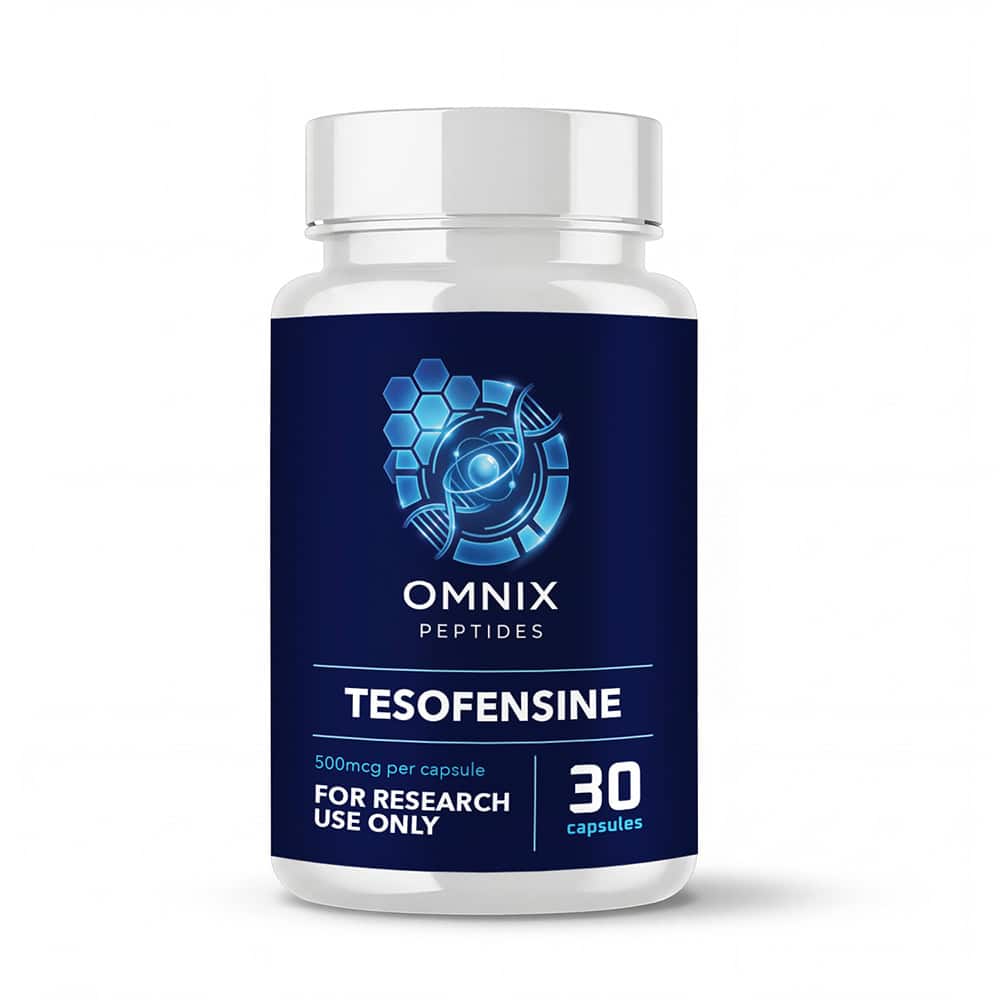
Tesofensine Capsules 500mcg
Tesofensine (NS2330) is a centrally acting triple monoamine reuptake inhibitor that blocks the presynaptic reuptake of dopamine, norepinephrine, and serotonin.
$170.00
Research goals: Metabolic & Weight
Description
Tesofensine (NS2330) is a centrally acting triple monoamine reuptake inhibitor that blocks the presynaptic reuptake of dopamine, norepinephrine, and serotonin. Originally developed by NeuroSearch (now licensed to Saniona) for Alzheimer’s and Parkinson’s disease, tesofensine was repurposed for obesity after substantial weight loss was consistently observed in early CNS trials. It has been studied in human Phase 2 randomized controlled trials and in Phase 3 registrational trials in Mexico, with regulatory submission to COFEPRIS receiving a favorable technical opinion in 2023.
The strongest peer-reviewed human finding comes from the Astrup et al. Phase 2 RCT in The Lancet: at 24 weeks, tesofensine 0.5 mg produced a mean diet-adjusted weight loss of 9.2%, and at 1.0 mg a loss of 10.6%, compared with 2.0% for diet plus placebo (p<0.0001).1
Important Note on the Evidence Base
Tesofensine has a well-developed Phase 2 evidence base in peer-reviewed Western journals (The Lancet, Obesity, International Journal of Obesity), but the Phase 3 registrational trial conducted by Medix in Mexico was reported only via press release and regulatory filing, not peer-reviewed publication. Additionally, the original 2008 Astrup et al. Lancet paper was the subject of an Expression of Concern issued by the journal in 2013 (Lancet 2013;381(9873):1167) relating to investigator conduct; the underlying efficacy data were not retracted, but the notice should be considered when interpreting the trial. Tesofensine is not approved by the FDA or EMA. Most published mechanism-of-action work is preclinical (rat models). All limitations are disclosed below alongside the findings.
Published Research on Tesofensine
Phase 2 Obesity Randomized Controlled Trial — Astrup et al., The Lancet (2008)
This double-blind, placebo-controlled trial enrolled 203 adults with obesity across five Danish obesity management centers, randomizing them to placebo or tesofensine 0.25, 0.5, or 1.0 mg once daily for 24 weeks. Mean diet-adjusted weight loss was 4.5%, 9.2%, and 10.6% across the escalating-amount arms, respectively, all significantly greater than placebo. The authors concluded that tesofensine 0.5 mg has the potential to produce a weight loss twice that of currently approved drugs
. The most common adverse events were dry mouth, nausea, constipation, hard stools, diarrhea, and insomnia. The 0.5 mg amount increased mean heart rate by 7.4 bpm without significant change in blood pressure; the 1.0 mg amount produced larger heart rate increases.1
Pooled Analysis in Parkinson’s and Alzheimer’s Disease — Astrup et al., Obesity (2008)
This meta-analysis of four randomized double-blind multicenter trials originally designed for Parkinson’s or Alzheimer’s disease pooled 740 tesofensine-treated and 228 placebo-treated participants, all administered once daily for 14 weeks without weight loss counseling. Adjusted mean weight change ranged from −0.5% at 0.125 mg to −2.8% at 1.0 mg versus +0.5% on placebo. In the obese subgroup, the highest amount produced a placebo-subtracted weight loss of 3.5% and increased the proportion of patients achieving ≥5% weight loss from 2% to 32% — the original observation that prompted the obesity development program.2
Energy Metabolism and Appetite — Sjödin et al., International Journal of Obesity (2010)
This study used whole-room indirect calorimetry to measure 24-hour energy expenditure, fat oxidation, and spontaneous physical activity in overweight and moderately obese men before and after tesofensine treatment. The findings indicated that tesofensine’s weight loss effect is driven both by appetite suppression and by a modest preservation or increase in 24-hour energy expenditure, distinguishing it from purely anorectic agents.3
Mechanism of Action in Diet-Induced Obese Rats — Hansen et al., European Journal of Pharmacology (2010)
This animal study compared tesofensine, sibutramine, and rimonabant in diet-induced obese rats. Tesofensine produced sustained weight loss and improved glycemic control across a 16-day administration protocol, with the hypophagic effect substantially blocked by α1-adrenergic and dopamine D1 receptor antagonists — implicating indirect activation of those pathways as the primary mechanism of appetite suppression rather than direct serotonergic effects.4
About the Compound
Tesofensine is a phenyltropane-class small molecule with intrinsic inhibitory activity on the dopamine, norepinephrine, and serotonin transporters (DAT, NET, SERT), with reported transporter inhibition IC50 values in the low single-digit nanomolar range. Positron emission tomography studies in humans have shown concentration-dependent DAT occupancy at oral amounts of 0.125–1.0 mg. Its weight-loss effect appears to combine appetite suppression (mediated indirectly through α1-adrenergic and dopamine D1 receptor pathways) with sustained energy expenditure. Pharmacokinetics are characterized by a long terminal half-life (approximately 9 days), making once-daily administration practical without titration after a brief lead-in.
- Compound class: small-molecule triple monoamine reuptake inhibitor (DAT/NET/SERT); phenyltropane derivative
- Mechanism: presynaptic blockade of dopamine, norepinephrine, and serotonin reuptake; centrally-acting appetite suppression and energy expenditure modulation
- Synonyms: NS2330, NS-2330
- CAS Number: 195875-84-4 (free base)
- Molecular Formula: C17H23Cl2NO
- Molecular Weight: 328.27 g/mol
- Originator: NeuroSearch A/S; licensed to Saniona AB; Mexico/Argentina commercial rights with Productos Medix
- Administration: once daily, oral
- Phase 3 status: Medix registrational trial completed (Mexico, 372 patients, 24 weeks)
- Regulatory status: not approved by the FDA or EMA. Mexico — COFEPRIS technical committee favorable opinion (2023). Phase 3 registrational data not yet peer-reviewed
- Common adverse events: dry mouth, insomnia, constipation, headache, increased heart rate
Product Specifications
- Format: capsules
- Strength: 500 mcg per capsule
- Count: 30 capsules per bottle
- Purity: ≥99% (HPLC verified)
- Container: sealed amber bottle
- Certificate of Analysis: lot-specific COA available
See the FDA Disclosure, Storage Instructions, and RUO tabs for handling, storage, and regulatory information.
References
- Astrup A, Madsbad S, Breum L, Jensen TJ, Kroustrup JP, Larsen TM. Effect of tesofensine on bodyweight loss, body composition, and quality of life in obese patients: a randomised, double-blind, placebo-controlled trial. Lancet. 2008;372(9653):1906-1913. doi:10.1016/S0140-6736(08)61525-1 (See Expression of Concern: Lancet. 2013;381(9873):1167.)
- Astrup A, Meier DH, Mikkelsen BO, Villumsen JS, Larsen TM. Weight loss produced by tesofensine in patients with Parkinson’s or Alzheimer’s disease. Obesity (Silver Spring). 2008;16(6):1363-1369. doi:10.1038/oby.2008.56
- Sjödin A, Gasteyger C, Nielsen AL, et al. The effect of the triple monoamine reuptake inhibitor tesofensine on energy metabolism and appetite in overweight and moderately obese men. Int J Obes (Lond). 2010;34(11):1634-1643. doi:10.1038/ijo.2010.87
- Hansen HH, Hansen G, Tang-Christensen M, et al. The novel triple monoamine reuptake inhibitor tesofensine induces sustained weight loss and improves glycemic control in the diet-induced obese rat: comparison to sibutramine and rimonabant. Eur J Pharmacol. 2010;636(1-3):88-95. doi:10.1016/j.ejphar.2010.03.026
Preparation and storage
Research-only handling information. Tesofensine is sold strictly for in vitro laboratory research. The handling and storage guidance below reflects standard practice in published peptide research literature. Tesofensine is not a drug, supplement, or food product, and is not for human consumption, veterinary use, or medical applications.
Format
- Form: Capsules
- Available strengths: 30ct
- Verified purity: >99% (HPLC, LC–MS)
- Documentation: Batch-specific Certificate of Analysis (COA) included
Handling for Research Use
Tesofensine capsules ship as a pre-encapsulated, dry oral-research format. No reconstitution is required. The capsules can be opened for analytical or assay work that requires the dry powder.
Storage & Handling
- Upon receipt: Store in a cool, dry place away from direct light.
- Short-term storage: Room temperature in a sealed container is acceptable for several months.
- Long-term storage: Refrigeration at 4 °C (39 °F) extends shelf stability. Capsules do not require freezing.
- Humidity: Keep the original desiccant-sealed container closed when not in use. Excess moisture can compromise capsule integrity.
- Light exposure: Minimize exposure to direct light during handling.
Important Notice
All Omnix Peptides products are sold for laboratory, research, or analytical purposes only. They are not for human consumption, veterinary use, or medical applications. Researchers and laboratory professionals must follow all applicable institutional, local, state, and federal regulations governing the handling of research compounds.
Citations
Citations and reference data. Omnix Peptides supplies research-grade compounds for use by qualified laboratory professionals. The references below cite published preclinical research conducted in animal models and in vitro systems. They are not intended to represent clinical evidence in humans, and Tesofensine has not been approved by the FDA, EMA, or any other regulatory authority for any indication.
Compound Reference Data
- Compound: Tesofensine
- CAS Number: 195875-84-4 (free base)
- Molecular Formula: C17H23Cl2NO
- Molecular Weight: 328.27 g/mol
- Sequence: —
- Synonyms: —
Selected Published Studies
The following peer-reviewed studies were conducted using animal models or in vitro cell-culture systems. They are listed here as a reference for researchers investigating Tesofensine. None of these studies should be interpreted as recommending Tesofensine for human use, treatment, or any clinical purpose.
- Astrup A, Madsbad S, Breum L, Jensen TJ, Kroustrup JP, Larsen TM. Effect of tesofensine on bodyweight loss, body composition, and quality of life in obese patients: a randomised, double-blind, placebo-controlled trial. Lancet. 2008;372(9653):1906-1913. doi:10.1016/S0140-6736(08)61525-1 (See Expression of Concern: Lancet. 2013;381(9873):1167.)
- Astrup A, Meier DH, Mikkelsen BO, Villumsen JS, Larsen TM. Weight loss produced by tesofensine in patients with Parkinson's or Alzheimer's disease. Obesity (Silver Spring). 2008;16(6):1363-1369. doi:10.1038/oby.2008.56
- Sjödin A, Gasteyger C, Nielsen AL, et al. The effect of the triple monoamine reuptake inhibitor tesofensine on energy metabolism and appetite in overweight and moderately obese men. Int J Obes (Lond). 2010;34(11):1634-1643. doi:10.1038/ijo.2010.87
- Hansen HH, Hansen G, Tang-Christensen M, et al. The novel triple monoamine reuptake inhibitor tesofensine induces sustained weight loss and improves glycemic control in the diet-induced obese rat: comparison to sibutramine and rimonabant. Eur J Pharmacol. 2010;636(1-3):88-95. doi:10.1016/j.ejphar.2010.03.026
Evidence-Base Disclosure
The published evidence base for Tesofensine consists predominantly of preclinical research — animal models (often rats or mice) and in vitro cell-culture experiments. Where Phase I or Phase II human trials exist, they are noted in the compound page summary. Researchers should interpret the cited literature within the experimental context of each individual study.
Frequently asked questions
Frequently asked questions about the Tesofensine Capsules. Questions on this page cover handling, storage, documentation, and ordering. Tesofensine is sold for laboratory, research, or analytical purposes only — not for human consumption, veterinary use, or medical applications.
Why does Omnix offer Tesofensine in a capsule format?
Capsule format is used in oral-research and analytical contexts where dry, pre-measured administration is preferred over a reconstituted solution. The capsules contain the same research-grade compound supplied in the vial format and are tested to the same purity specification.
Do the Tesofensine capsules require refrigeration?
Capsules are stable at room temperature for several months when kept in a cool, dry place away from direct light. Refrigeration at 4 °C (39 °F) extends shelf stability and is recommended for long-term storage. Capsules do not require freezing.
Can the capsules be opened to access the dry powder?
Yes. The capsule shell can be opened for analytical or assay work that requires direct handling of the dry powder. Once opened, the powder should be used immediately or transferred to a sealed, light-protected container.
Is Tesofensine approved by the FDA?
No. Tesofensine is not approved by the FDA, EMA, or any other regulatory authority for any indication. Tesofensine is sold by Omnix Peptides strictly for laboratory, research, or analytical purposes. It is not for human consumption, veterinary use, or medical applications.
What is included with each Tesofensine Capsules?
Each order includes the sealed product container and a batch-specific Certificate of Analysis (COA) verifying identity and purity by HPLC and LC–MS. The full COA library for Omnix Peptides is available at /coa-lab-reports/.
What is a Certificate of Analysis (COA), and how do I read it?
A COA is a batch-specific lab report that documents the identity, purity, and quality control results for the production lot you receive. The COA lists the compound name, CAS number, lot number, analytical methods used (HPLC, LC–MS), and the measured purity percentage. Every Omnix order includes the COA for the lot shipped.
What is the CAS number for Tesofensine?
The CAS number for Tesofensine is 195875-84-4 (free base). Researchers can use this identifier to locate published literature in PubMed and other scientific databases.
How does Omnix Peptides ship orders?
Orders ship from a US-based facility with tracked domestic shipping. Free shipping is offered on orders over $99. Lyophilized vials and capsules ship at ambient temperature; sprays ship insulated when seasonal conditions require it. Tracking information is provided by email after the order ships.
What if my product arrives damaged or the seal is broken?
Contact Omnix Peptides within 48 hours of delivery. Product damaged in transit or arriving with a compromised seal will be replaced at no cost. See the Shipping & Return Policy at /shipping-return-policy/ for full terms.
Where can I find published research on Tesofensine?
Peer-reviewed studies relevant to Tesofensine are listed in the Citations tab on this product page. The same studies can be located independently on PubMed using the CAS number (195875-84-4 (free base)) or the compound name.
Customer reviews
Certificate of Analysis
Third-party HPLC purity analysis performed by an independent laboratory for this batch.
Reviews
There are no reviews yet.